
A stand that transforms into a canopy for the school garden at República de Panamá Public School
Since 2012, we have collaborated with Madrid City Council to design its stand for the National Environmental Congress. Each year, the challenge is to make the pavilion an example of sustainability, where its real purpose lies in the second life it is given after the exhibition.
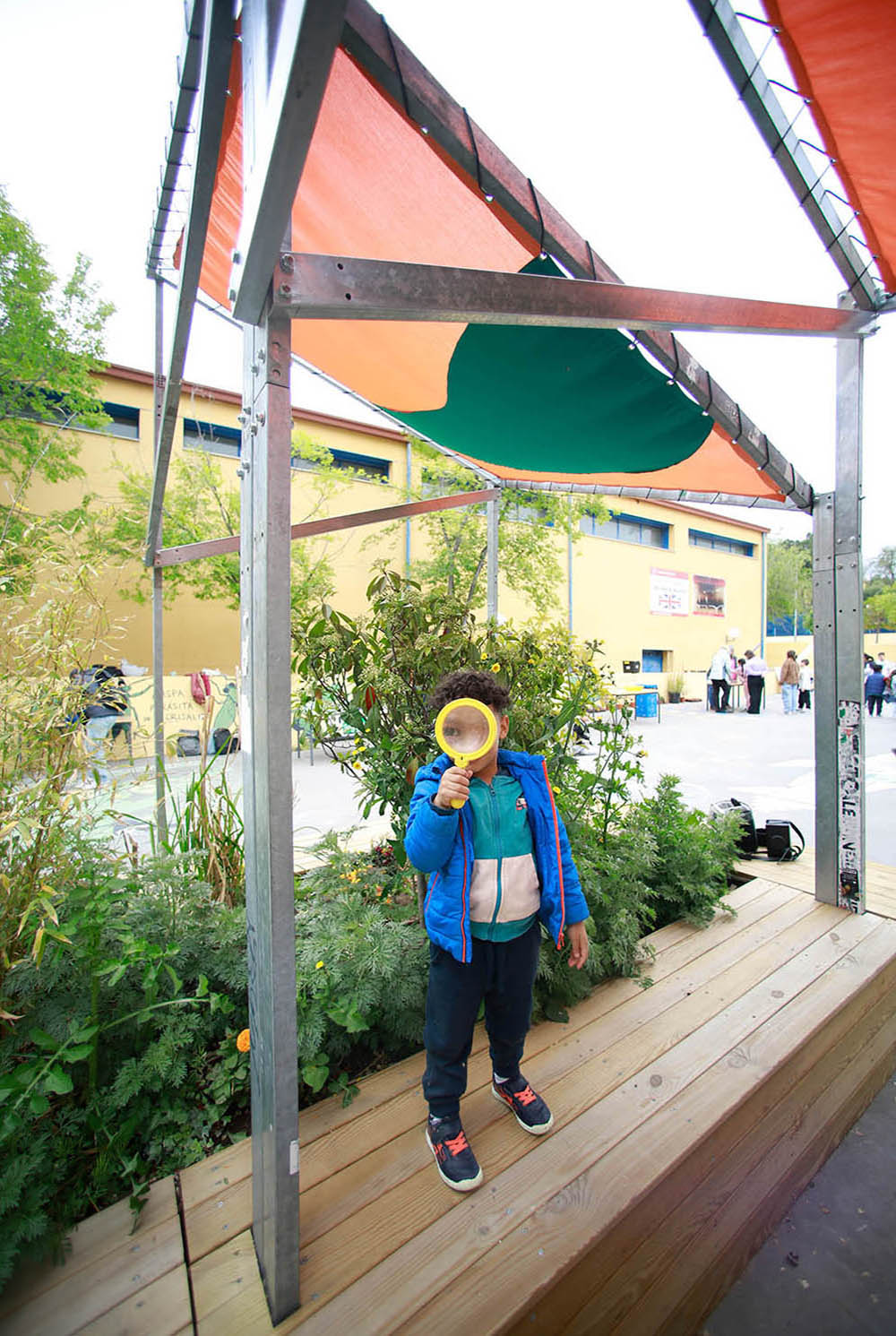
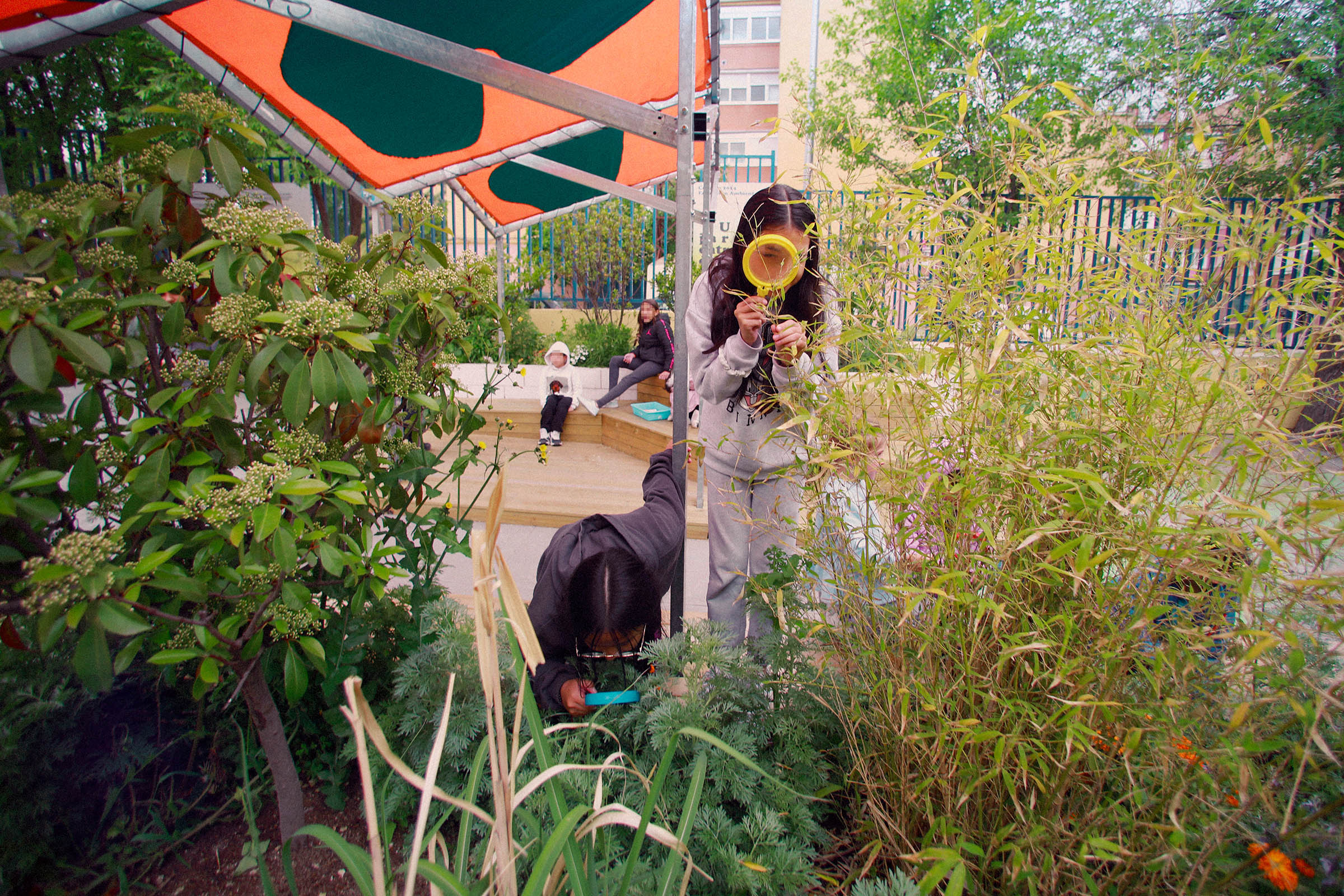
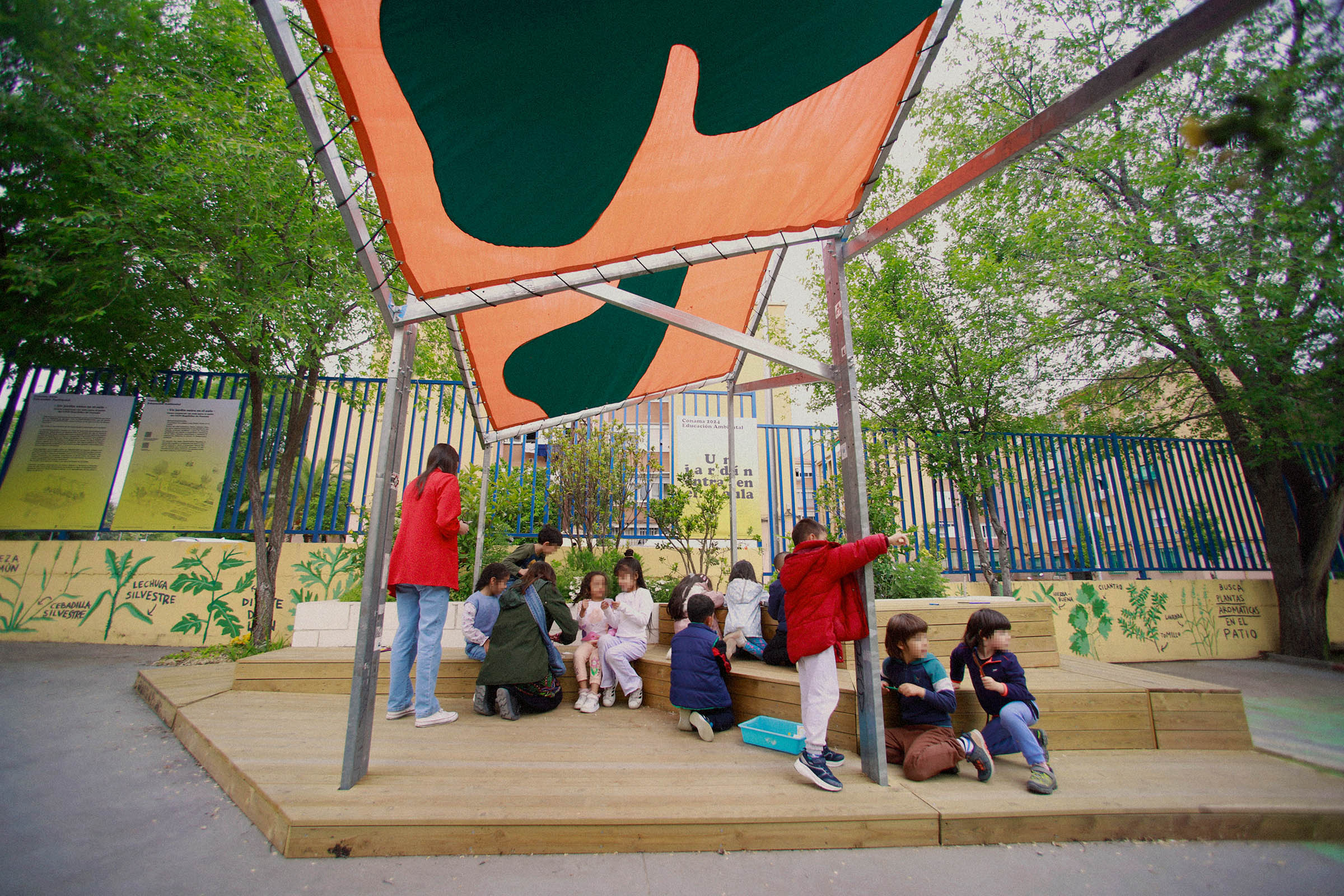
On this occasion, we worked together with the community of República de Panamá Public School in Madrid, where the structure was relocated to the school playground, creating a shaded area, an amphitheatre, an outdoor classroom, and an extension of the existing school garden.
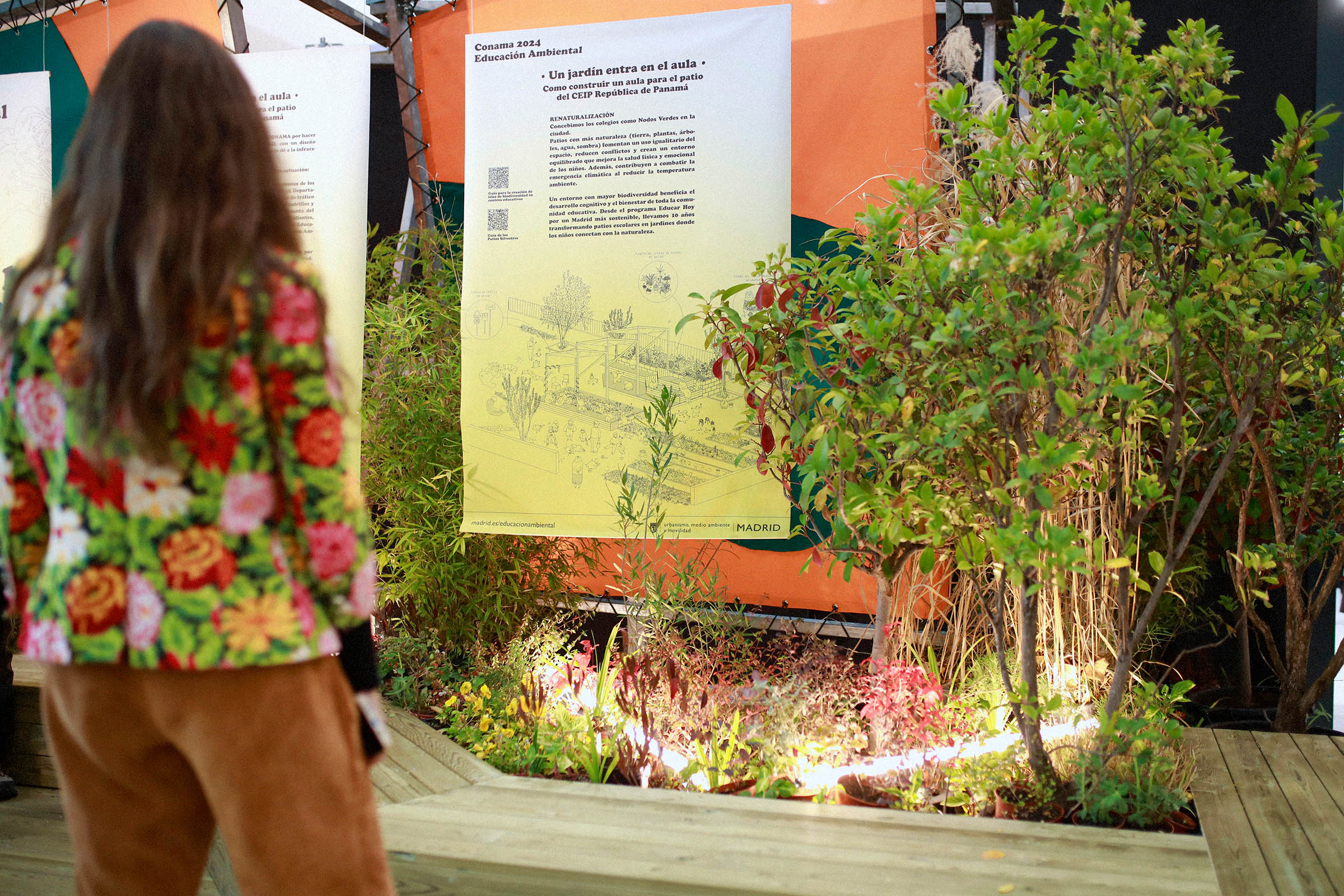
The design reuses materials sourced from Madrid’s municipal storage facilities: damaged traffic signs, bricks and concrete blocks from the Municipal Stonemasonry Workshop, plants from the Retiro Greenhouse Nursery, mulch from the Migas Calientes plant, logistical support from the Huerto del Retiro Environmental Information and Education Centre, as well as municipal transport services.
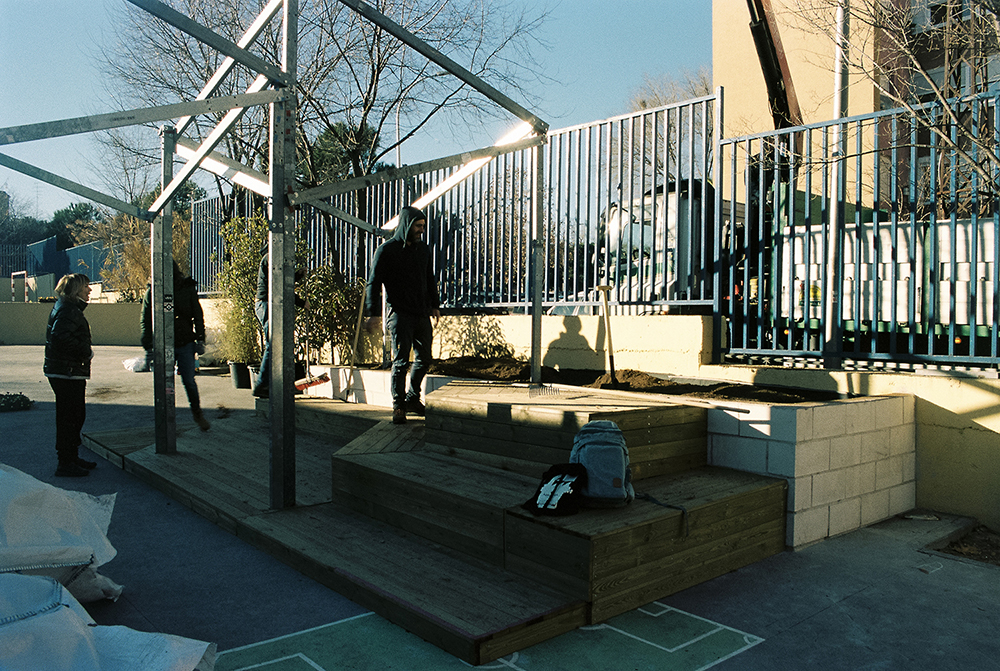
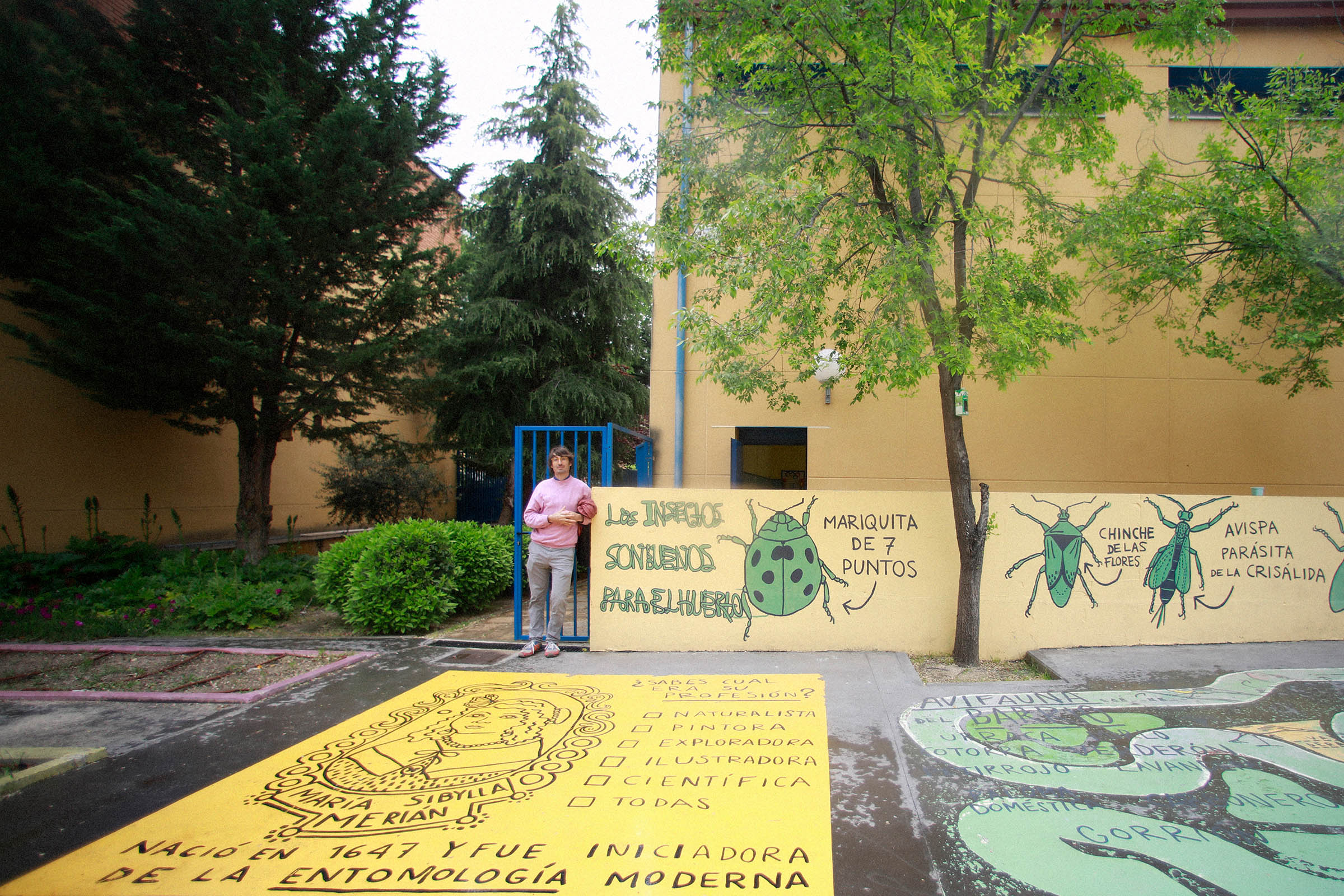
After the exhibition, together with the Environmental Education Department, we transformed the stand into an outdoor classroom in the playground of República de Panamá School, reusing it as part of the school’s playground renaturalisation strategy. During the inauguration, a workshop was also held with illustrator David Cárdenas to design and paint the ground around the installation, incorporating representations of native flora and fauna.
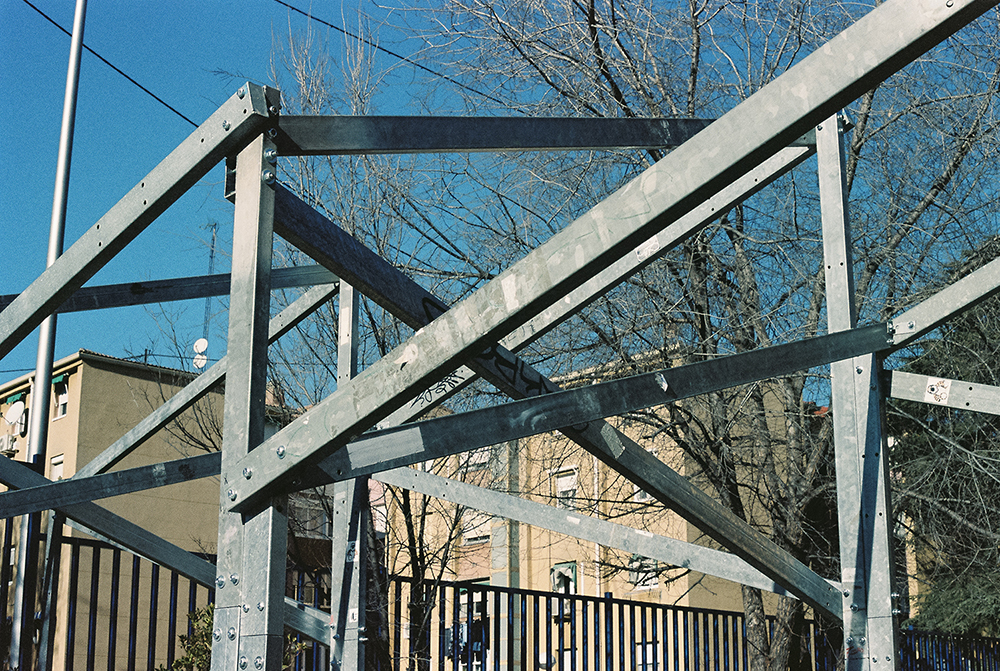
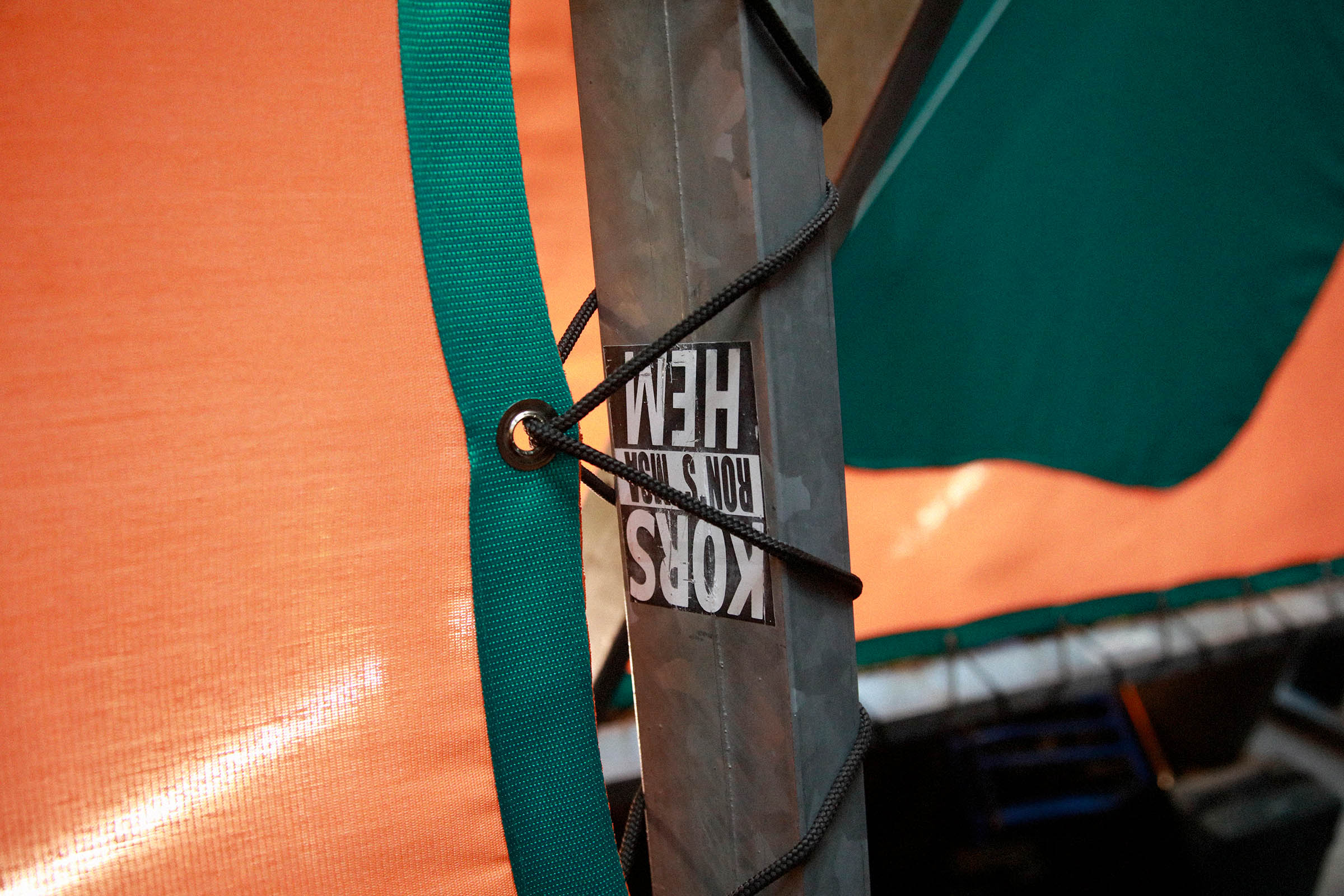
Traffic sign poles from the municipal storage facilities support lightweight canvas shades that provide shelter from the sun. The shade cast by the existing trees in the school grounds is also used to make the space more comfortable and habitable throughout the year.
The whole intervention was conceived as an adaptable and flexible system of furniture: an outdoor classroom with two planters, a wooden tiered seating area, and a space for gathering. Together with the shaded areas created, these elements make up the open-air classroom, which can be complemented with movable items typical of any learning space, such as blackboards or chairs.
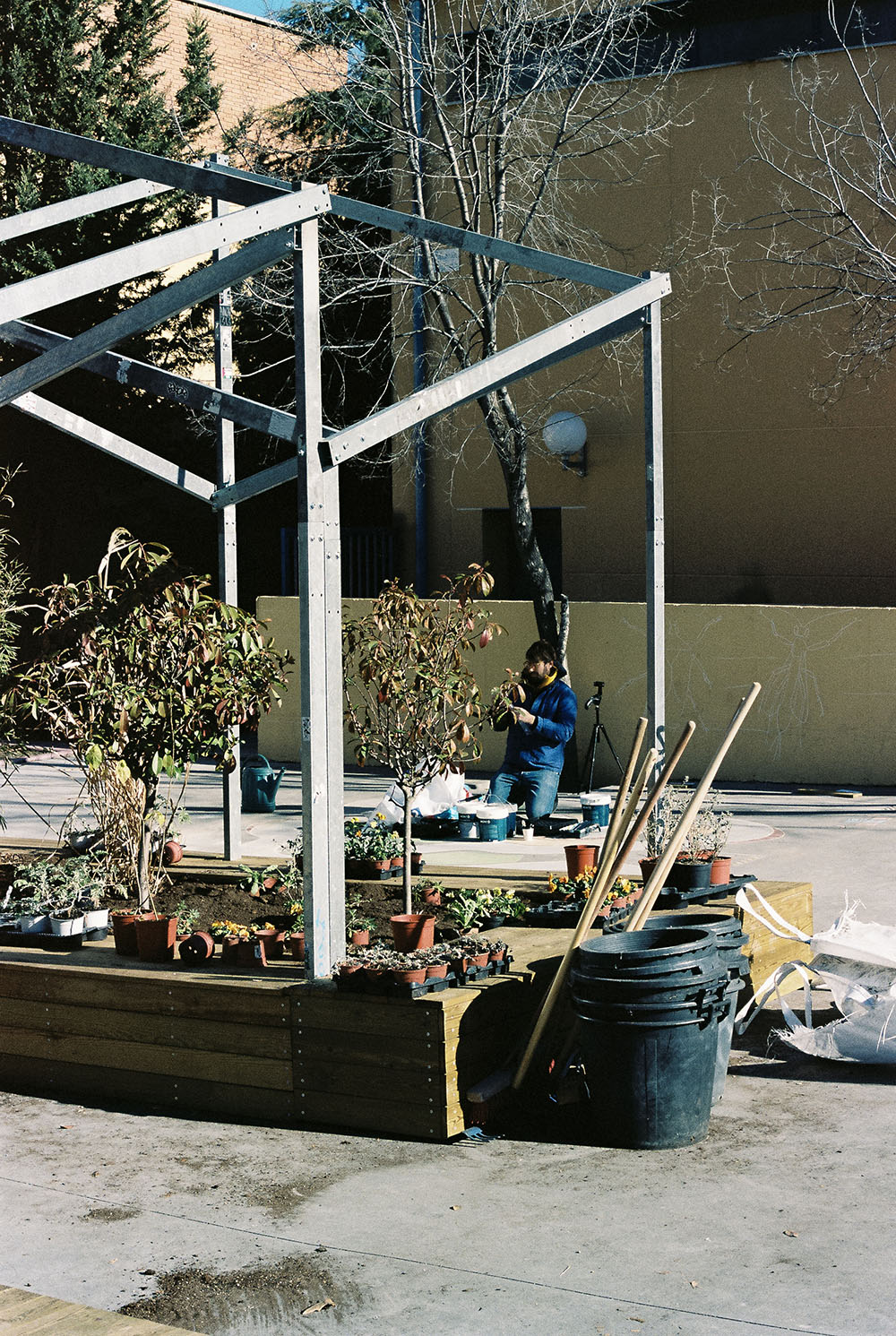
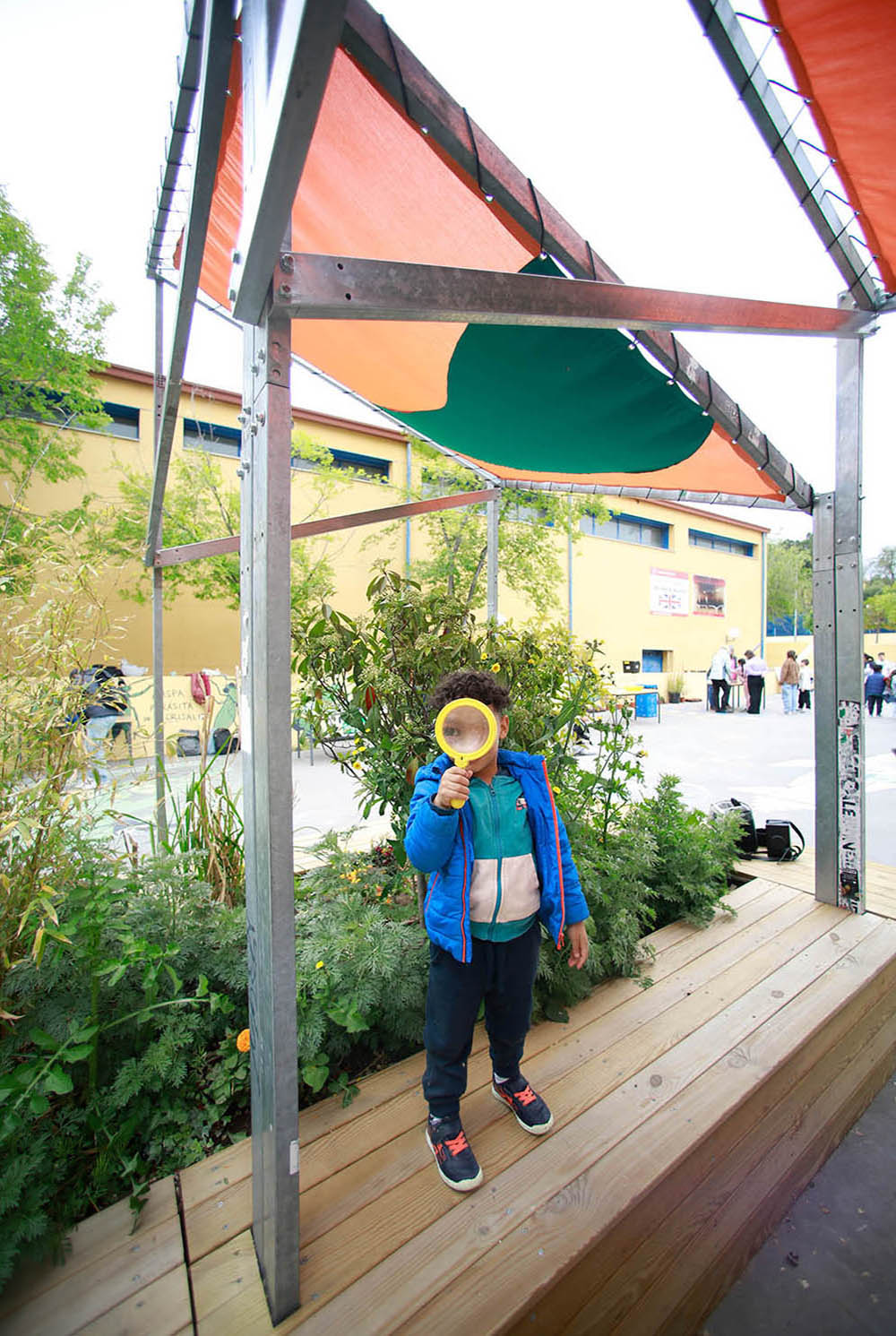
The native plants from the municipal nurseries not only bring vegetation into the outdoor classroom, but also support educational activities connected to nature, such as observing pollinating insects and caring for the school garden.
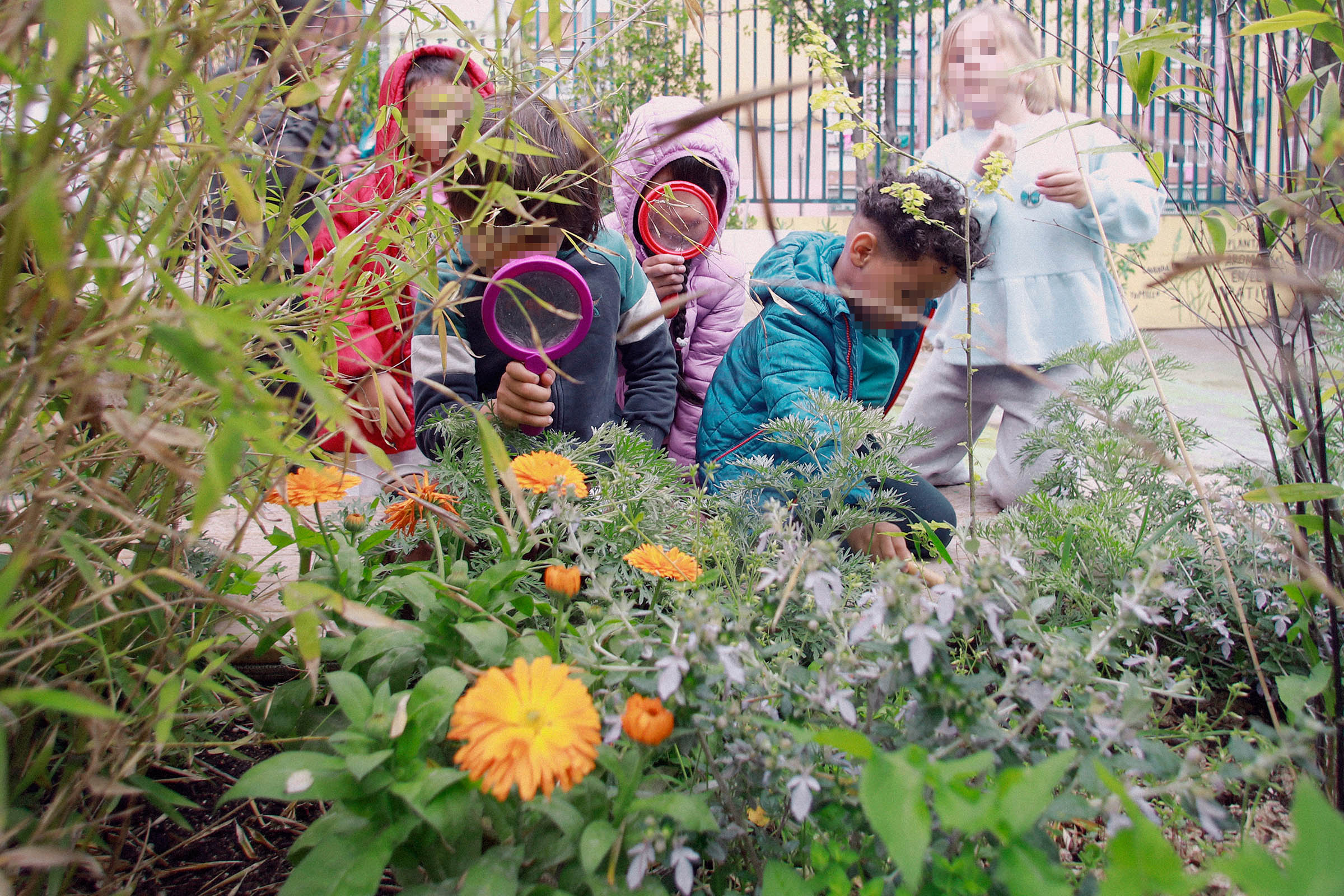
Its implementation and use are managed participatively by the teaching staff in coordination with the school community, ensuring its upkeep while fostering a sense of ownership among pupils. It is a pilot project to rethink educational spaces and make use of resources already available in the city to improve school environments, designed with replication in other schools in mind.